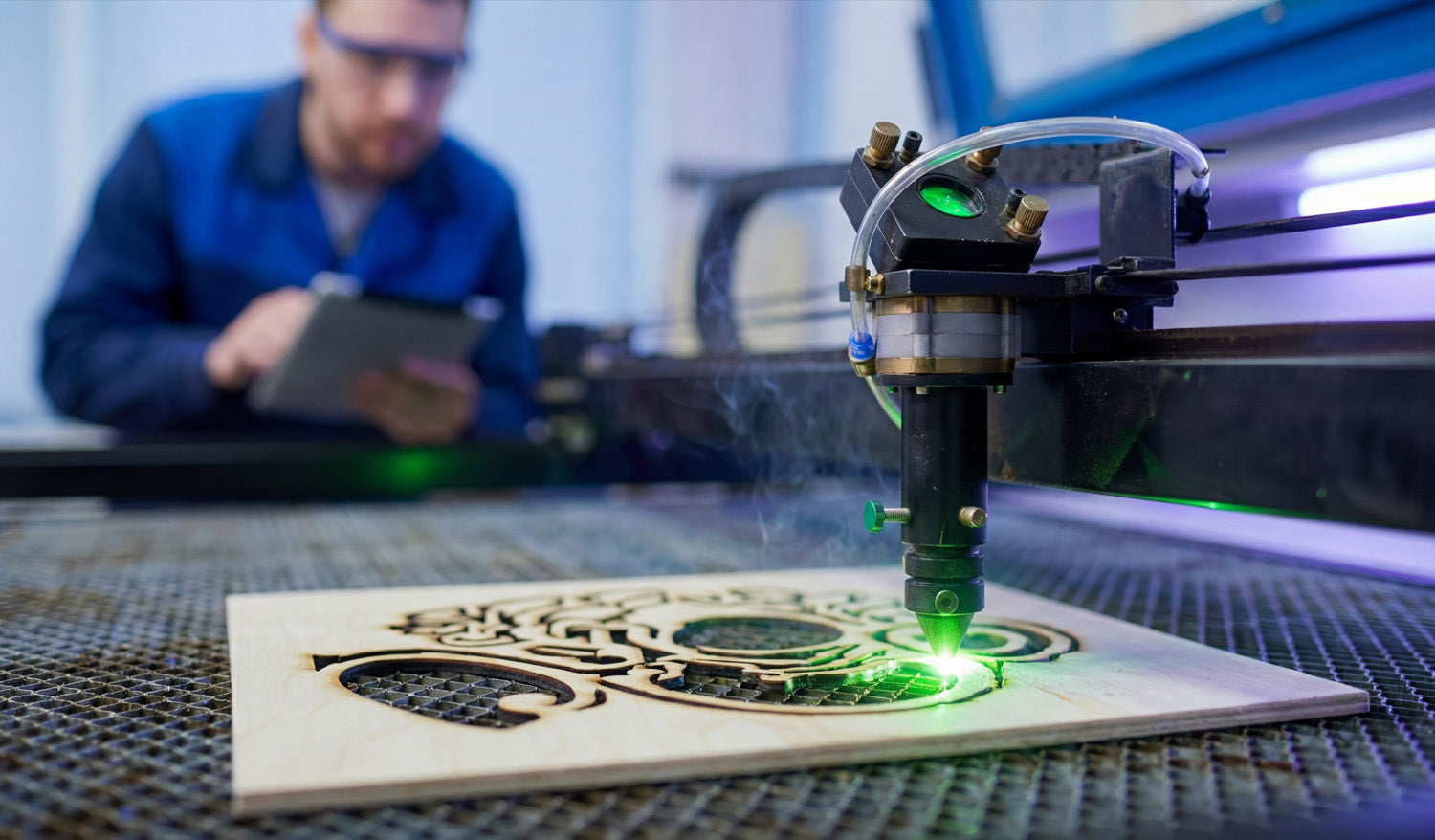
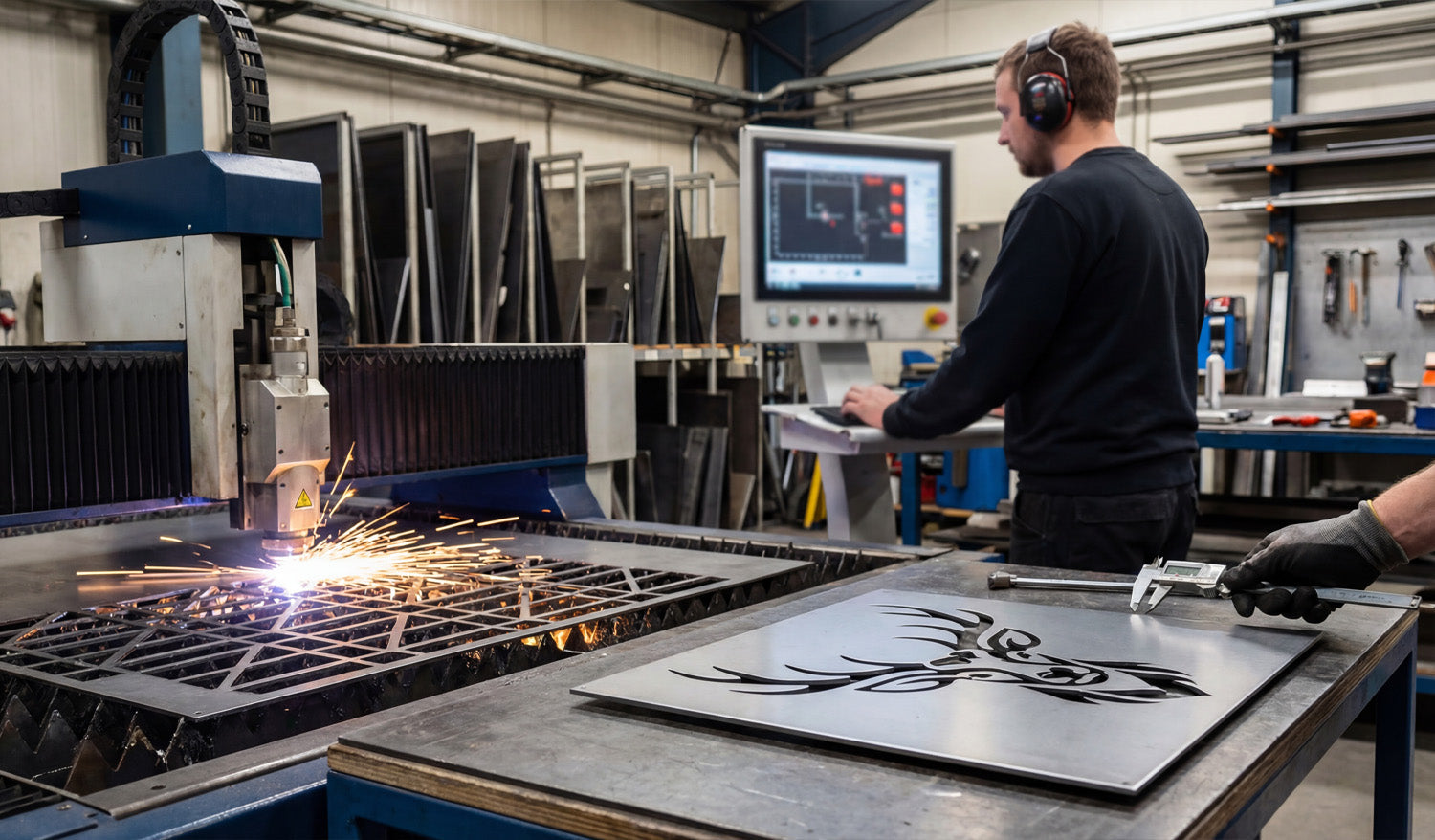
Using DXF files for CNC projects can be incredibly powerful—but small mistakes in those files can quickly turn into wasted material, broken tools, and long nights at the machine. If you learn how to avoid the most common DXF pitfalls early, your CNC work becomes cleaner, faster, and far more predictable.
1. Not Checking Units and Scale Before CAM
One of the easiest ways to ruin a job is to skip the basic “size check” when importing a DXF file.
- Common mistake: Designing in millimeters, importing as inches (or the opposite), so parts come in 25.4× bigger or smaller.
-
How to avoid it:
- Always confirm whether the DXF was drawn in mm or inches.
- Measure a known feature (for example, a 50 mm edge or 2" hole spacing) right after import.
- If size is wrong, apply a single global scale and then lock units in your CAM template.
2. Ignoring Open Contours and Tiny Gaps
DXF files can look like closed shapes on screen but still have tiny breaks that confuse CAM software.
- Common mistake: Assuming every outline is a closed loop just because it “looks closed” at normal zoom.
-
How to avoid it:
- Zoom in on corners and intersections to hunt for small gaps.
- Use snap-to-endpoint plus extend/trim tools to close any openings.
- Use “join / polyline” tools to convert many segments into one closed contour.
- In CAM, test by selecting “chain” or “profile” in one click—if it stops mid-way, there is still a gap.
3. Leaving Duplicate and Overlapping Geometry
Overlapping lines are invisible in CAD but very obvious on the finished part: the machine cuts the same path twice.
- Common mistake: Copy-pasting geometry, importing multiple versions, or tracing images and forgetting to delete old outlines.
-
How to avoid it:
- Run a “delete duplicates / overkill” command if your CAD supports it.
- Temporarily move shapes to see if another line is hiding underneath.
- Rebuild messy shapes with fresh, single polylines instead of patching old ones.
- Verify in CAM that toolpaths show one clean pass, not two lines on top of each other.
4. Using Overly Complex Curves and Traced Artwork
Automatic image traces and imported logos often come with thousands of tiny segments and random points.
- Common mistake: Sending raw traced geometry straight to CAM, causing choppy motion and slow feed rates.
-
How to avoid it:
- Simplify curves with “optimize / simplify path” tools to reduce node count.
- Replace rough outlines with true arcs and circles where possible.
- Limit ultra-fine detail to areas where it really adds value; remove noise everywhere else.
- Preview toolpaths—if curves look like saw teeth instead of smooth lines, clean the DXF more.
5. Mixing Cut, Engrave, and Reference Lines on One Layer
When everything lives on a single layer, it is easy to accidentally cut reference geometry or miss engraving lines.
- Common mistake: Exporting all entities on “Layer 0” and then sorting them manually in CAM every time.
-
How to avoid it:
- Organize your DXF into clear layers such as:
- OUTER_CUT – final outer profiles
- INNER_CUT – holes and internal cutouts
- ENGRAVE / MARK – logos, text, bend lines
- REFERENCE – centerlines, notes, dimensions
- Use colors per layer so you can visually verify everything at a glance.
- Create CAM templates that map these layers directly to tools and strategies.
- Organize your DXF into clear layers such as:
6. Forgetting About Kerf and Tool Diameter in the DXF Stage
DXF geometry describes “perfect” shapes. Your tool or beam always has thickness—if you ignore that, parts will not fit.
- Common mistake: Drawing all features at nominal size without considering how kerf or bit diameter changes the final dimension.
-
How to avoid it:
- Know your typical kerf width or tool diameter for each process.
- Use CAM’s inside/outside compensation correctly for profiles.
- For critical fits (slots, tabs, mating holes), edit the DXF based on real test cuts and measured results.
- Document standard clearances (for example, +0.1 mm, +0.2 mm) and reuse them on future designs.
7. Relying on Live Fonts Instead of Vector Text
Fonts look great in your design software, but many CAM tools and controllers do not understand text entities at all.
- Common mistake: Leaving text as editable font objects and assuming the CNC side has the same fonts installed.
-
How to avoid it:
- Before exporting to DXF, convert text to outlines/curves.
- Choose fonts that are CNC-friendly: bold, open shapes with limited thin strokes.
- For cut-through text, prefer stencil-style fonts so inner islands stay attached.
- Re-import your DXF into CAM as a test to confirm text looks exactly as intended.
8. Leaving Random Junk and Tiny Artifacts in the File
Stray points and microscopic segments may be invisible in CAD, but the machine will still try to cut them.
- Common mistake: Keeping small leftovers from trimming, tracing, or copying geometry.
-
How to avoid it:
- Use selection filters to find and delete very short entities below a certain length.
- Manually inspect tight corners and busy areas where artifacts usually hide.
- After cleanup, review the CAM simulation: the toolpath should not show random “spikes” or micro-moves.
9. Bad Origin and Part Placement
If your DXF part is floating far away from (0,0), nesting and alignment become much more painful.
- Common mistake: Designing around a random base point and never repositioning the part.
-
How to avoid it:
- Pick a logical origin—such as the bottom-left corner or part center.
- Move the entire part so that key point sits at (0,0) in CAD.
- Delete title blocks, borders, or old geometry that lives far from the part.
- Save this version as your CNC-ready DXF so every import starts clean.
10. Skipping Test Cuts and Assuming the DXF Is Perfect
Even a “perfect” DXF can behave differently on a real machine with real material.
- Common mistake: Loading a brand-new DXF and immediately cutting a full sheet or expensive stock.
-
How to avoid it:
- Run a small test cut on scrap that includes tight features, text, and critical fits.
- Measure parts and check how holes, tabs, and slots actually fit together.
- If needed, tweak either the DXF or CAM offsets, then save a “proven” version for production.
- Keep notes with each DXF: best material, thickness, settings, and any special tricks.
Quick Checklist Before Sending a DXF to the CNC
Before you press “post” or “start,” ask yourself:
- ✔ Are units and scale confirmed with a real measurement?
- ✔ Are all profiles closed, with no gaps or overlaps?
- ✔ Have duplicates and tiny junk entities been removed?
- ✔ Are curves simplified enough for smooth machine motion?
- ✔ Are cut, engrave, and reference lines separated on proper layers?
- ✔ Has text been converted to outlines and checked at real size?
- ✔ Is the part positioned sensibly near (0,0)?
- ✔ Has at least one small test cut been made and measured?
Conclusion
Avoiding common mistakes with DXF files is really about respecting how your CNC machine “thinks.” When you feed it clean geometry in the right units, with closed loops, sensible layers, and realistic feature sizes, CAM becomes easier, cutting becomes faster, and your finished parts match the drawing the first time. A little extra attention at the DXF stage saves a lot of time, material, and stress on the shop floor.