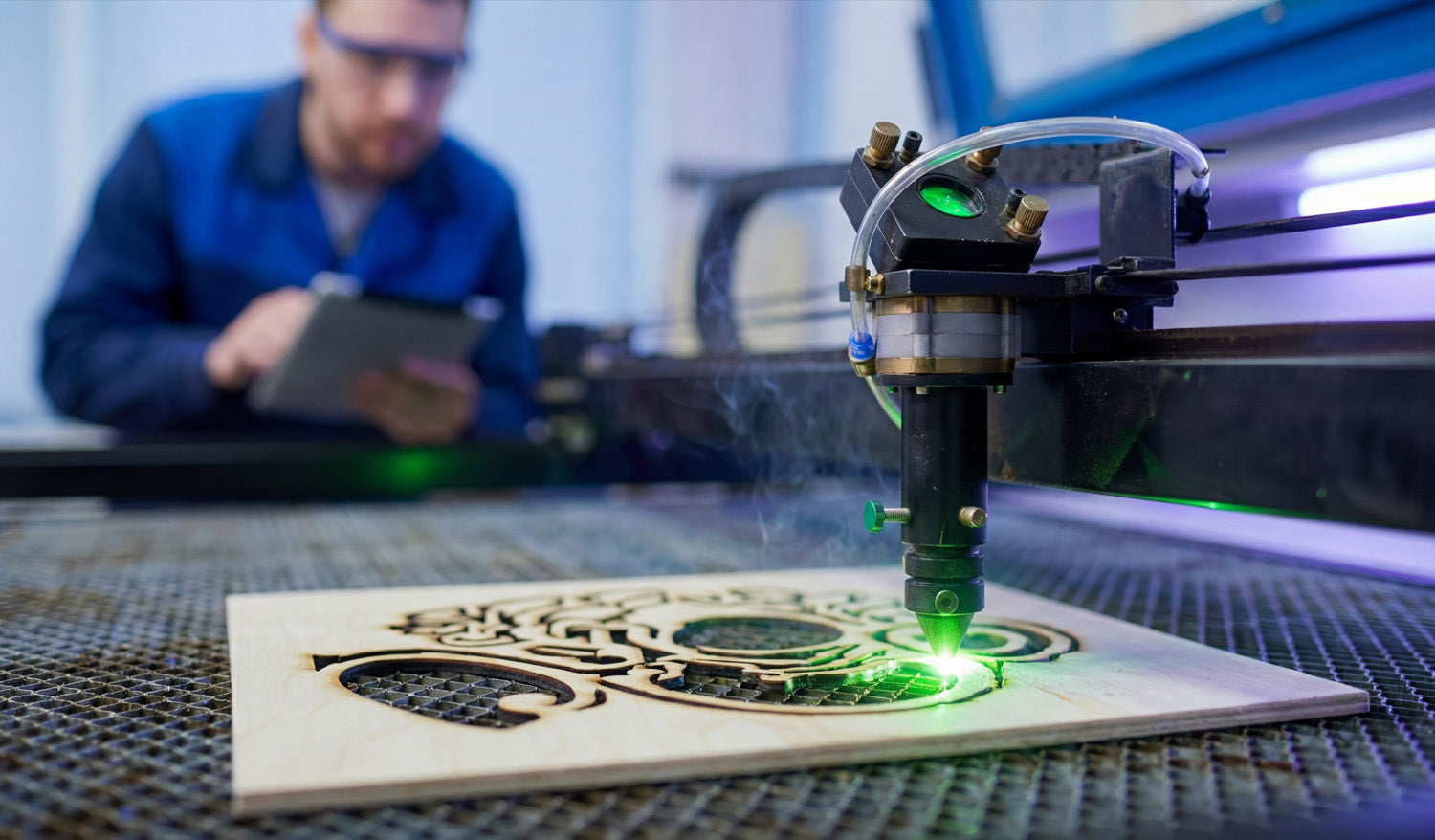
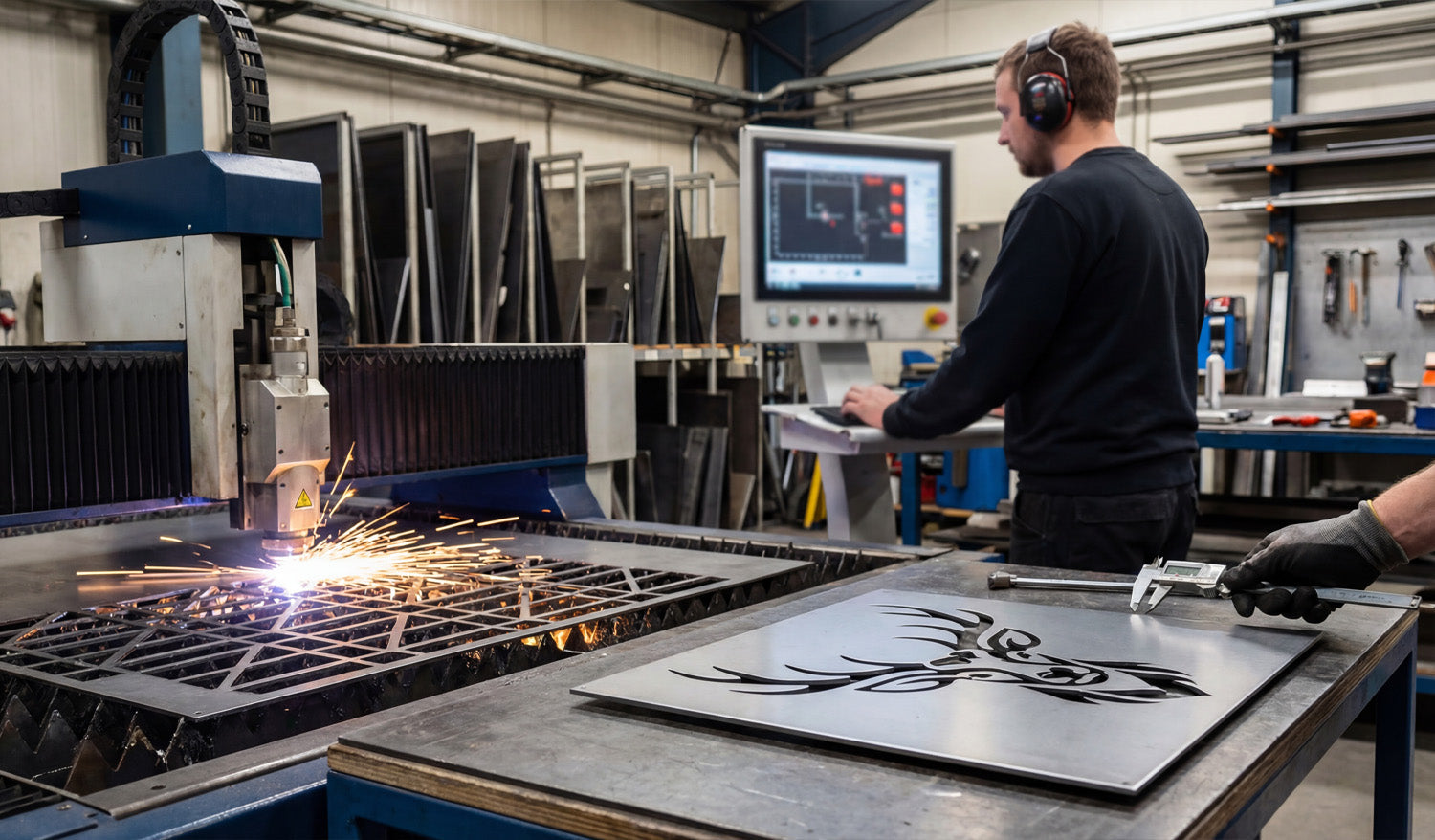
Learning how to scale DXF files correctly for different CNC machines helps you avoid sizing mistakes, wasted material, and parts that simply do not fit.
Why Scaling DXF Files Matters in CNC Work
A DXF file is just a 2D blueprint, but every CNC machine has its own table size, units, and material limits. If the design is not scaled correctly, you may end up with a part that is too big for the machine, too small to be useful, or completely off from the drawing your customer approved.
Good scaling practice makes it easy to:
- Move the same design between laser, plasma, and router machines.
- Create small, medium, and large versions of a product line.
- Match real-world dimensions and hole sizes accurately.
- Keep design proportions consistent across different materials and thicknesses.
Step 1: Understand Units vs Scaling
Before you scale anything, you need to know if the DXF file uses millimeters or inches. Many “scaling problems” are really just unit problems.
- Units problem: The file was drawn in inches but imported as millimeters (or the opposite), causing a 25.4x size error.
- Scaling problem: You intentionally want to make the design larger or smaller while keeping the same proportions.
Always fix unit issues first, then perform intentional scaling.
How to Check Units Quickly
- Import the DXF into your CAD or CAM software.
- Measure a known feature (for example, a 100 mm width specified by the designer).
- If the measurement is off by exactly 25.4x, you know you have an inches vs millimeters mismatch.
Step 2: Decide the Final Size for Each Machine
Different CNC machines have different working areas and sweet spots. Before scaling, answer these questions:
- What is the maximum cutting area? For example, 600×400 mm, 4×4 ft, or 4×8 ft.
- How much margin do you need? Leave a small border around the sheet to avoid hitting clamps or edges.
- What size does the customer or product require? For signs, panels, or art, you may have specific height or width targets.
Once you know the final target size, you can calculate a clean scaling factor and apply it safely.
Step 3: Use Uniform (Proportional) Scaling
When you scale a DXF file, you almost always want to keep the same proportions in both directions.
- Choose a uniform scaling option so X and Y are multiplied by the same factor.
- Avoid stretching only in one axis unless you have a very specific reason to distort the design.
Example: Scaling to Fit a 600 mm Wide Machine
- Measure the current width of the design in your CAD software (for example, 800 mm).
- Decide the new width (for example, 580 mm to leave a bit of margin on a 600 mm table).
- Calculate the scaling factor: 580 ÷ 800 = 0.725.
- Select all geometry and apply a uniform scale of 72.5% (factor 0.725).
- Re-measure the width to confirm it is now approximately 580 mm.
Step 4: Consider Minimum Feature Sizes and Material Limits
Scaling is not just about table size; it also affects hole diameters, bridge thicknesses, text readability, and material behavior.
- Small details: When you scale down, thin bridges and tiny gaps may become too fragile to cut.
- Holes and slots: Very small holes may close up due to kerf and heat, especially in plasma cutting.
- Text and logos: At small sizes, letters can burn away or blur together.
After scaling, zoom in and check:
- Are the narrowest parts still wider than your kerf and strong enough for the material?
- Are hole sizes still functional for bolts, screws, or hardware?
- Is engraved or cut text still legible at the new size?
Step 5: Scaling DXF Files for Different Machine Types
Scaling for Laser Cutters
- Lasers can handle very fine details, but thin bridges in paper or thin wood can still burn away.
- When scaling down, consider slightly thickening critical lines and bridges in your CAD software.
- Double-check small internal shapes like letters “e, a, o” for readability at the new size.
Scaling for Plasma Cutters
- Plasma has a wider kerf and more heat than lasers.
- A design that works at 600 mm tall may not work at 200 mm tall without adjusting detail.
- After scaling down, increase minimum slot and gap sizes so molten metal has room to escape.
Scaling for CNC Routers
- Router bits have a fixed diameter, so inside corners and fine details round off.
- When scaling up, deeper cuts may require more passes or a stronger machine.
- Check small internal corners and pockets after scaling; some features may need to be redesigned for the tool size.
Step 6: Use Reference Shapes to Verify Scale Across Machines
A simple reference shape inside your DXF makes scaling and verification easier.
- Add a known-size rectangle or line (for example, 100 mm wide) next to your design.
- After importing into any CAM or controller software, measure that reference shape.
- If it reads correctly, you know the entire drawing scaled and imported correctly.
This trick is especially helpful when moving designs between different brands of machines and software.
Step 7: Save Machine-Specific Versions of Your DXF
To keep your workflow organized, save separate versions of scaled files for each machine or product size.
- Use clear filenames like design-name_laser-400mm.dxf or panel-name_plasma-1200mm.dxf.
- Store these in folders by machine type or product line.
- Always keep a master DXF at the original size so you can create new variants later.
Common Scaling Mistakes to Avoid
- Scaling text but not outlining it: Some systems change text appearance when you scale. Convert text to paths before final scaling.
- Forgetting to scale hole centers and fixtures: If you use separate construction geometry for fixtures, make sure it scales too.
- Only scaling in CAM: If you scale only at the CAM or controller level, it is easy to forget what size the “real” design is. It is often cleaner to scale in CAD and save a new DXF.
- Skipping test pieces: Always cut a small test piece after scaling, especially when you change machines or materials.
Simple Scaling Workflow You Can Reuse
Here is a quick, repeatable process for scaling DXF files for different CNC machines:
- Open the master DXF in your CAD software.
- Confirm units by measuring a known feature.
- Set target size based on machine bed and product requirements.
- Calculate scaling factor (new size ÷ old size).
- Apply uniform scaling to all geometry.
- Check minimum feature sizes for the target machine and material.
- Add or verify a reference dimension box (for example, 100 mm line).
- Save as a new DXF named for that machine or size.
- Import into CAM, verify size with the reference, and run a test cut.
Conclusion
Scaling DXF files for different CNC machines is not difficult once you understand units, target size, and the limits of each cutting process. By using uniform scaling, checking minimum feature sizes, adding reference shapes, and saving machine-specific versions of your designs, you can confidently move the same artwork between laser, plasma, router, and other CNC systems without nasty surprises. The result is more flexible production and a design library that truly works across your entire shop.