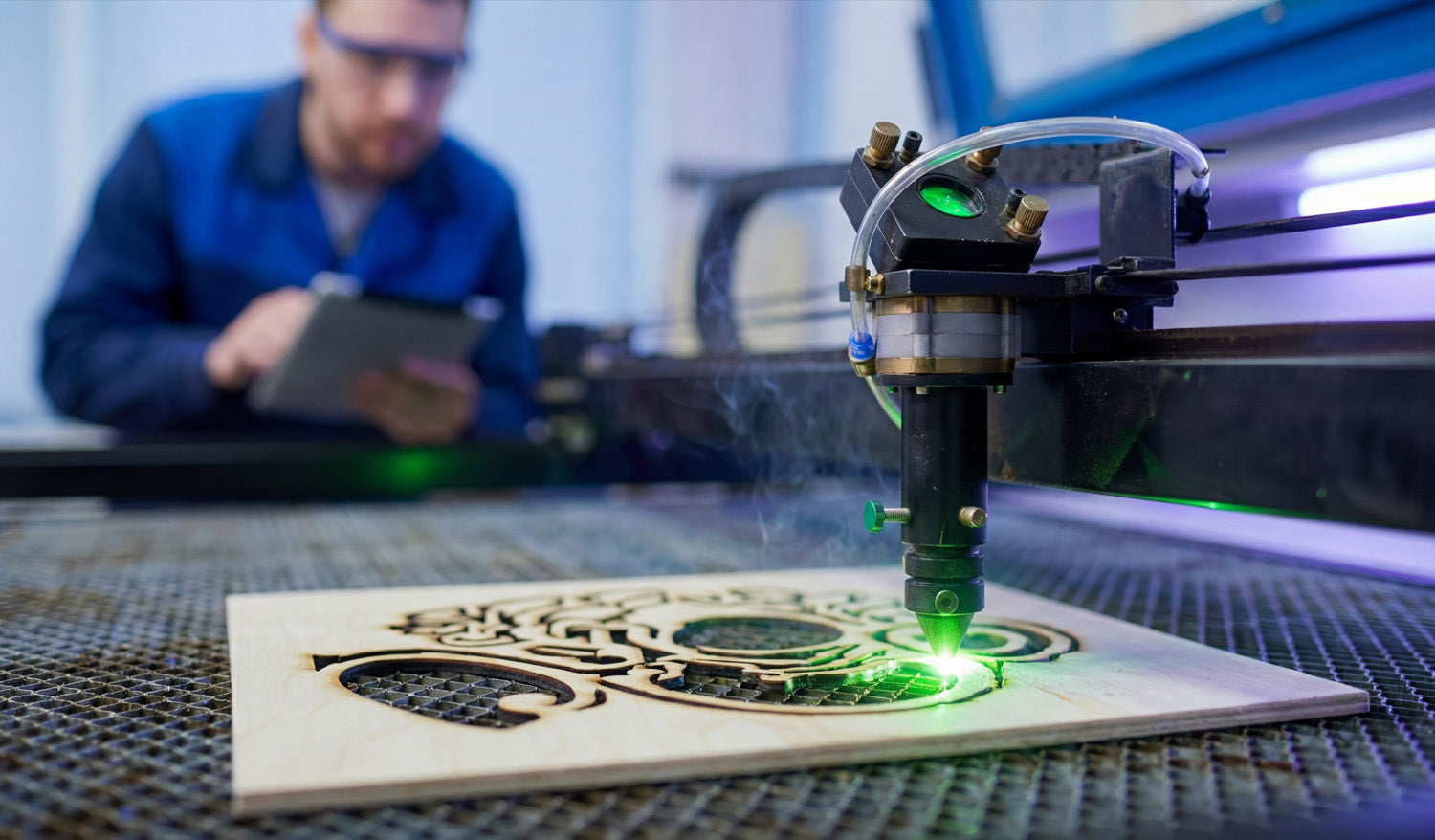
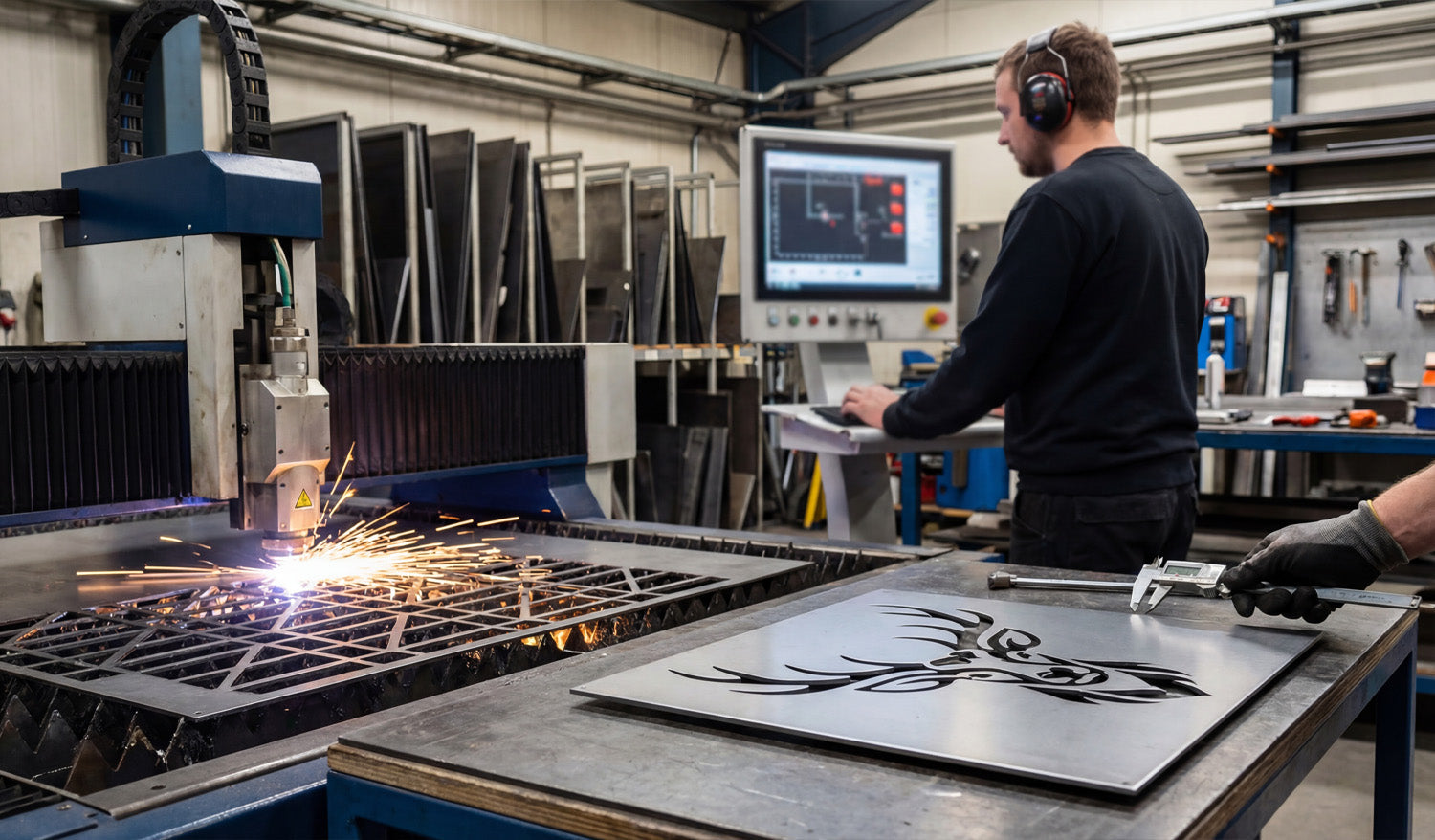
DXF files are essential for custom CNC cutting projects because they turn unique ideas, sketches, and customer drawings into precise, machine-ready paths that lasers, plasmas, routers, and water-jets can cut repeatably and with confidence.
Custom CNC Projects Need a Reliable “Common Language”
Custom work is messy by nature. Every job brings new dimensions, different materials, and changing client requirements. DXF (Drawing Exchange Format) acts as a stable language between design, CAM, and the CNC machine.
- Neutral format: DXF is supported by almost every CAD, CAM, and CNC controller.
- Vector-based: It stores lines, arcs, and curves as exact math, not pixels.
- Flexible: You can start from a sketch, a logo, or a 3D model and end up with a clean 2D DXF profile.
Without a format like DXF, every new custom job would require different tools or manual redraws before you could even start programming toolpaths.
From Customer Idea to Cut Part: Where DXF Fits
Most custom CNC cutting jobs follow a similar path, no matter the industry:
- Concept: A customer sends a sketch, photo, PDF, or basic drawing.
- Design: You translate that concept into accurate 2D geometry in CAD or vector software.
- DXF Export: You export the cut-ready outlines and features as a DXF file.
- CAM & Nesting: CAM software imports the DXF, applies kerf, lead-ins, and nesting on real sheets.
- Cutting: The CNC machine runs toolpaths generated from that DXF-based geometry.
DXF is the key link between what the customer has in mind and what your machine can cut in steel, wood, acrylic, or other materials.
DXF Files Capture the Exact Geometry Custom Jobs Require
Custom CNC parts often have critical dimensions: bolt hole locations, slot widths, tab lengths, or mating features that must line up the first time.
- True circles for holes: DXF represents holes as actual circles, not rough polygons from image traces.
- Accurate offsets: Edge distances, wall thicknesses, and cutouts can match the print down to the fraction.
- Closed profiles: Clean closed loops allow CAM to generate reliable inside and outside cuts.
This level of geometric accuracy is what lets you promise tight fits, repeatable parts, and fewer “file-related” errors on custom orders.
DXF Makes Revisions and Iterations Practical
In custom CNC work, clients change their minds—sometimes more than once. DXF files make those revisions manageable instead of painful.
- Update a few dimensions or move features in CAD, then re-export as a new DXF revision.
- Regenerate toolpaths from the updated DXF without starting the CAM process from zero.
- Keep a clear revision history:
projectname_R1.dxf,projectname_R2.dxf, and so on.
Because DXF is lightweight and predictable, you can move from v1 to v2 to v3 quickly, without breaking your workflow for each change.
Layer Support Helps Coordinate Complex Custom Operations
Many custom jobs involve more than just cutting: engraving serial numbers, marking bend lines, or adding logos. DXF layers let you handle all of that in a single file.
- CUT_OUTSIDE: Final outer profiles of the part.
- CUT_INSIDE: Holes, slots, windows, and internal features.
- ENGRAVE / MARK: Text, logos, part IDs, bend lines, and weld symbols.
- REFERENCE: Construction geometry that never gets cut.
In CAM, each layer can be mapped to different tools, speeds, or power settings, so one DXF can drive a complete multi-step custom process.
DXF Works Across Different CNC Cutting Technologies
Custom shops often run more than one type of machine. DXF is one of the few formats that fits smoothly into all of them.
- Laser cutting: Fine decorative details, signage, and thin-plate components.
- Plasma cutting: Structural brackets, panels, and heavy metal art.
- CNC routing: Woodworking, furniture parts, templates, and plastics.
- Water-jet cutting: Thick metals, stone, glass, and composite parts.
You can maintain a single DXF-based part library and create machine-specific CAM setups, instead of maintaining separate drawing formats for each machine.
DXF Files Reduce Miscommunication with Customers
Custom CNC work often involves back-and-forth communication. DXF files give you something concrete to review together.
- Share DXF-based PDFs or screenshots so customers can confirm shapes and dimensions.
- Use layer-based notes for bend lines, mounting points, or logo positions.
- When issues arise, refer to the exact geometry instead of vague descriptions.
This reduces misunderstandings and ensures that what you cut matches what the customer expects.
DXF Supports Customization at Scale
Many modern CNC businesses offer customizable products—signs, panels, brackets, and decor items with names, dates, or logos. DXF files make that scalable.
- Start from a master DXF template with pre-designed layout and mounting features.
- Swap out text or logo areas per customer while keeping all critical geometry unchanged.
- Re-nest customized parts on sheets quickly since the base outline stays consistent.
With a good library of templates, you can deliver “custom” pieces fast without redesigning every job from scratch.
DXF Plays Nicely with Quoting and Production Planning
Because DXF files are structured and consistent, you can connect them to quoting, nesting, and scheduling systems.
- CAM and nesting software can estimate cut length, pierce count, and cycle time from DXF geometry.
- Those estimates feed into material and time-based quotes for custom jobs.
- Once approved, the same DXF becomes the production geometry—no re-entry or manual translation needed.
This closes the loop from quote to cut, which is especially valuable when you handle a lot of unique small-batch projects.
DXF Files Are Easy to Store, Reuse, and Archive
Another reason DXF is essential for custom CNC cutting is its long-term reliability.
- DXF has been a standard for decades—new software continues to support it.
- Files are lightweight and easy to archive by project, customer, or part number.
- Repeat customers can reorder old projects using the same proven DXF geometry.
That means custom jobs do not need to stay “one-offs.” When a project returns next year, you can be up and running again quickly.
Common Problems When Custom Jobs Skip DXF
When custom cutting projects try to bypass DXF or rely on the wrong formats, issues show up fast.
- Working from images only: Requires manual tracing, which introduces error and inconsistency.
- Non-neutral CAD formats: Lock you into one system and make collaboration difficult.
- Unstructured files: Mix engraving, cutting, and reference geometry with no layers or organization.
DXF solves these problems by giving you a standardized, structured way to describe the part, regardless of where it originated.
Conclusion
DXF files are essential for custom CNC cutting projects because they connect unique customer ideas with the precise, repeatable motion your machines need. They carry clean geometry, layer information, and units between design, CAM, and the cutting floor, making it possible to revise fast, collaborate clearly, standardize templates, and run mixed technologies from the same core data. If your business depends on custom CNC work, mastering DXF is not optional—it is the foundation of a reliable, scalable workflow.