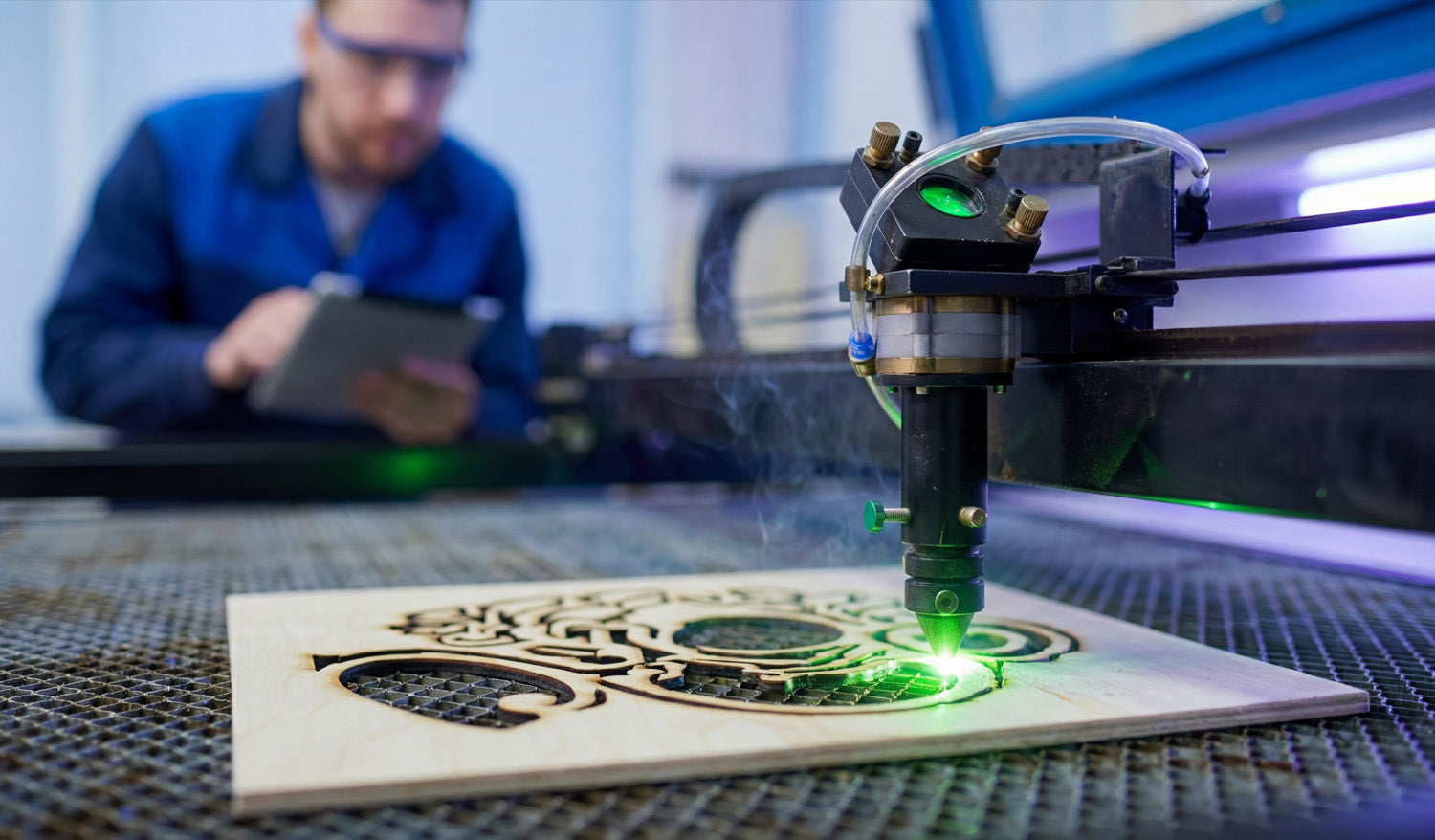
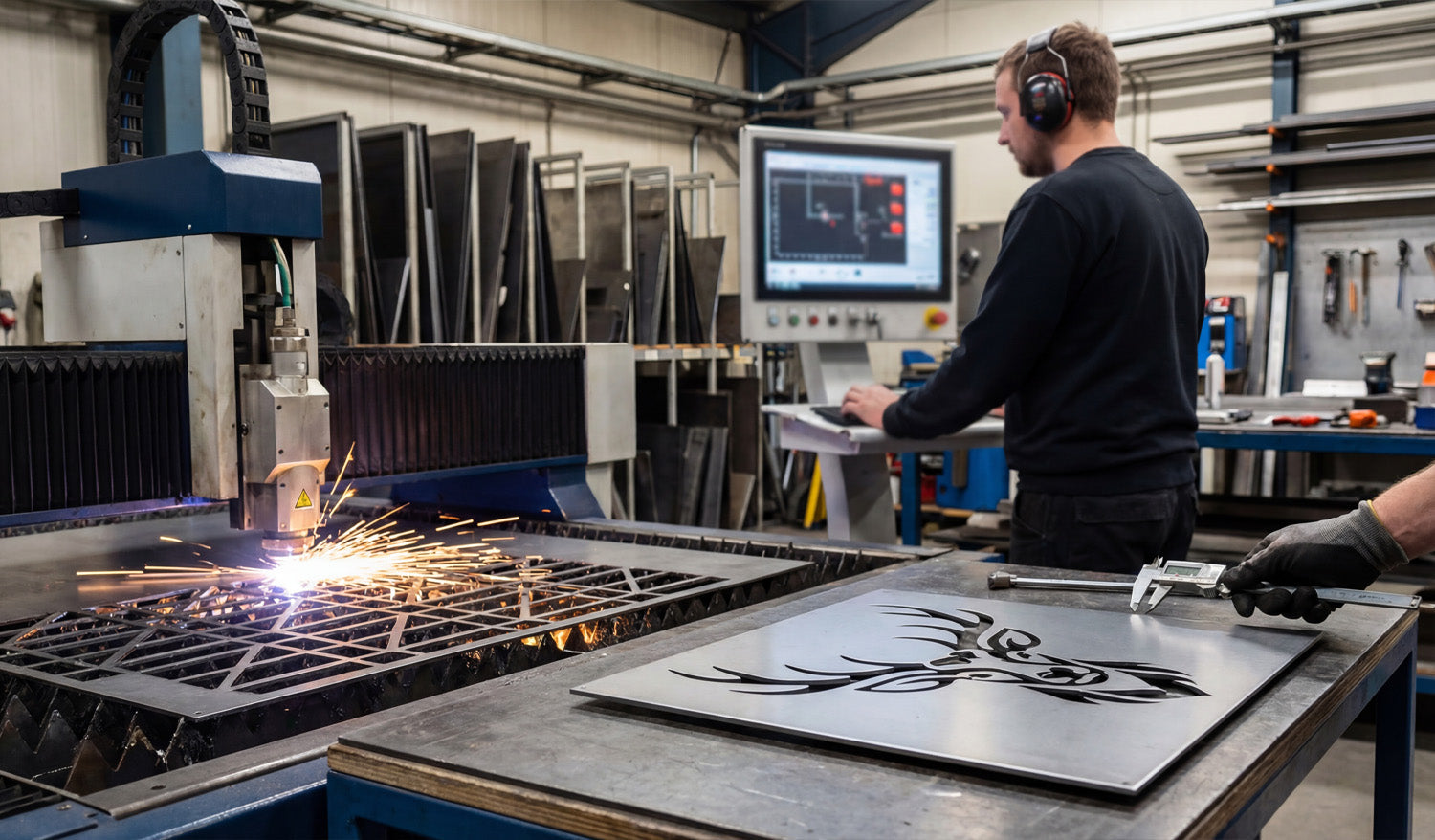
DXF files became the standard language for CNC cutting because they are simple, open, and work with almost every CAD, CAM, and machine controller.
What Is a DXF File?
DXF stands for Drawing Exchange Format. It was created as a neutral way for different CAD programs to share 2D drawings. Instead of being locked to one brand or one piece of software, a DXF file can be read by hundreds of programs across Windows, macOS, and Linux.
For CNC users, that means you can design in your favorite CAD tool, export as DXF, and then move the file into almost any CAM or control software that drives your laser, plasma, router, or water-jet table.
A Short History of DXF in CNC
As CNC machines became more common in metal shops, sign shops, and woodworking studios, manufacturers needed a file format that was easy to exchange. DXF spread quickly because:
- Most CAD software already supported it.
- Machine builders found it easy to parse and convert to G-code.
- Shops could send drawings to each other without worrying about which CAD program the other side used.
Over time, “Can your machine import DXF?” became one of the first questions people asked before buying a CNC system. That is how DXF quietly became the default standard.
Technical Reasons DXF Works So Well for CNC Cutting
DXF is not magic, but it has several technical features that make it perfect for 2D cutting work.
- Vector based: DXF stores lines, arcs, circles, and polylines as precise math, not pixels. That is exactly what a CNC machine needs for clean toolpaths.
- Unit friendly: Drawings can be created in inches or millimeters, then scaled as needed during import.
- Layer support: You can separate cut, engrave, score, and reference geometry on different layers for easier CAM setup.
- Human readable: Many DXF versions are text based, which makes debugging or editing by script possible.
- 2D focused: Most CNC cutting work is flat—sheet metal, plywood, acrylic, and so on. DXF is optimized for exactly that.
Why CNC Software Loves DXF
From budget hobby software to industrial CAM packages, almost every CNC tool supports DXF import. That consistency gives you a few big advantages:
- Smoother workflow: You do not need to convert between random formats; you just export DXF and import it into your CAM.
- Less file drama: Shops, freelancers, and customers can share the same DXF without worrying which CAD system created it.
- Fewer geometry surprises: Because DXF is widely used and mature, most importers handle it very reliably.
DXF vs Other File Formats for CNC Cutting
There are many design formats out there, but DXF sits in a sweet spot for CNC cutting work.
- DXF vs DWG: DWG is powerful but heavily tied to specific CAD ecosystems. DXF is more open and better supported by third-party CNC tools.
- DXF vs SVG: SVG is common on the web and in graphic design, but it was not designed for machine tools. It can work for lasers, yet DXF usually imports with cleaner geometry and more predictable scaling.
- DXF vs AI/PDF: Illustrator and PDF files are great for print and branding, but they often need extra cleanup before CNC use. Converting them to DXF is a standard part of most CNC workflows.
- DXF vs STL: STL is a 3D mesh format used for 3D printing and milling. For 2D cutting, it is overkill and far less convenient than DXF.
- DXF vs G-code: G-code is machine-specific motion code, not a drawing format. Many shops create or receive DXF drawings and then generate G-code from them inside CAM software.
How DXF Helps You Build a Reusable CNC Design Library
Because DXF is so widely accepted, it is ideal for creating a long-term design library for your shop.
- You can cut the same design on different machines (laser today, plasma tomorrow) by re-toolpathing the same DXF.
- You can outsource cutting to another shop without sending proprietary CAD files.
- You can reuse and remix old designs easily, adding text, resizing, or combining elements for new products.
Over time, a well-organized DXF library becomes one of the most valuable assets in a CNC business, letting you respond quickly to custom orders and repeat jobs.
Best Practices When Working with DXF Files
Even though DXF is the standard, a few habits will keep your files clean and machine-friendly:
- Keep shapes closed so inside and outside cuts are clear.
- Remove duplicate lines and tiny overlapping segments that can cause extra tool moves.
- Use layers to separate operations like cut, engrave, and reference.
- Test new designs on scrap material before running full production.
Using Ready-Made DXF Files in Your CNC Shop
You do not always have to draw everything from scratch. Many shops speed up their workflow by using cut-ready DXF libraries for metal wall art, panels, signs, and decor. As long as the license allows commercial use, you can focus on cutting, finishing, and selling products instead of spending hours on design work.
If you are just starting or want to expand your library, you can experiment with free designs and later move to larger bundles when you know what sells best in your market.
Conclusion
DXF became the standard for CNC cutting because it combines simplicity, openness, and excellent compatibility. It gives designers, machine builders, and shop owners a common language that works across different tools, software, and workflows. Whether you run a small garage shop or a busy fabrication business, building your process around DXF files will keep your CNC projects flexible, portable, and future-proof.